




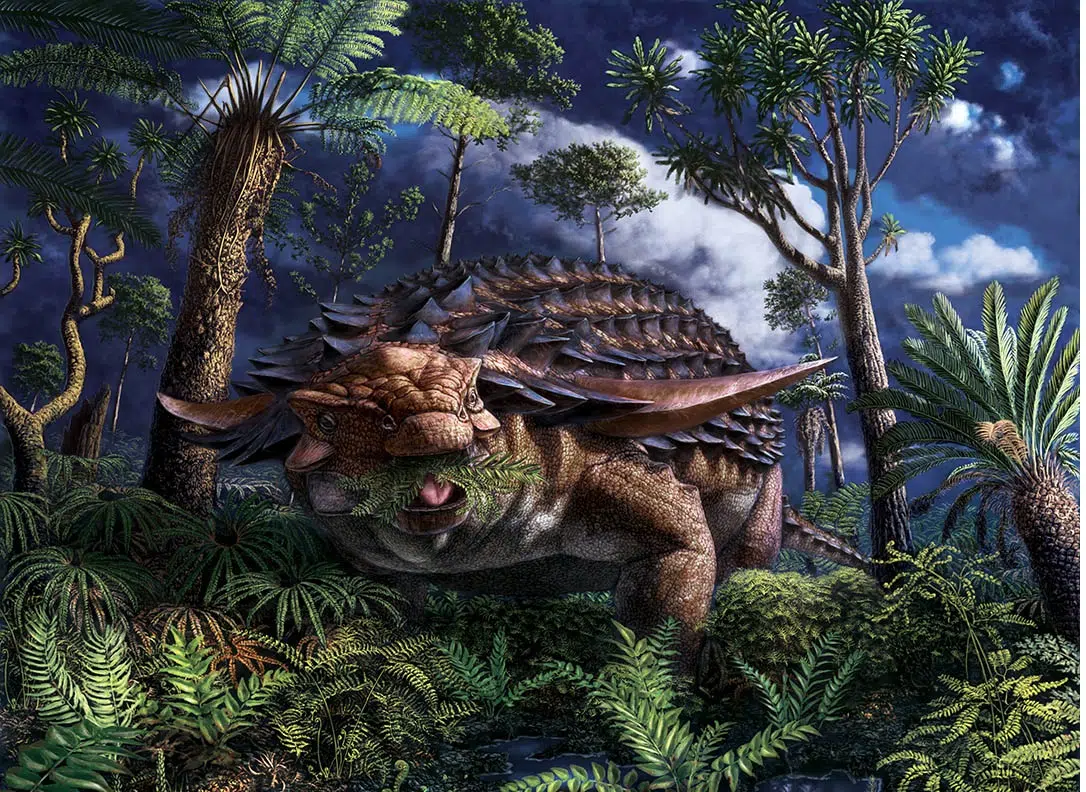
Researchers at the University of Saskatchewan recently studied the best-preserved dinosaur stomach ever discovered. The stomach belonged to a Borealopelta, a 1,300 kilogram armour plated dinosaur was washed out to sea more than 110 million years ago, and was discovered in a mine near Fort McMurray in 2011.
USask Geologist Jim Basinger was apart of the team that analysed the stomach contents, which was found in a mummified mass, he says, was about the size of a basketball. Basinger says up until now, the diet of many dinosaurs was almost entirely speculation with very little evidence and to have solid evidence of what the animal did eat, Basinger suggests, is remarkably uncommon. He adds this allowed them to not just say it was a plant eater, but what was it eating and where was it eating it. From the dinosaur’s last meal the researchers were able to tell that the animal was being very selective and 80% of the plant material it consumed was ferns.
Basinger says they also found a fascinating amount of charcoal in the stomach, and it appears the dinosaur was choosing a wildfire ecology, where the ferns may have been more abundant. He says people often think of dinosaurs as a pile of bones in drawers, but every once in a while we are reminded there is a whole lot more out there that we don’t know, and hasn’t been discovered yet.
Basinger was apart of team that included researchers from the Royal Tyrell Museum in Drumheller, Usask and the University of Brandon.