




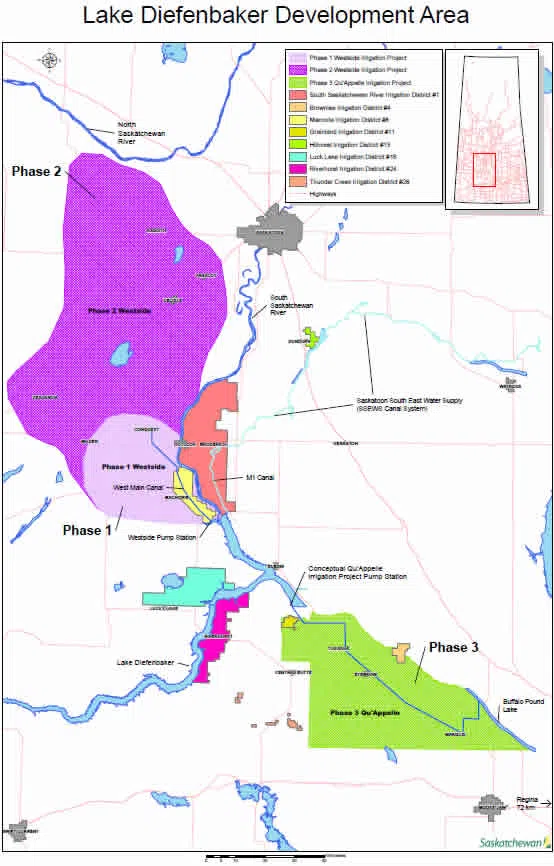
The University of Saskatchewan’s director of the Global Water Futures program hopes that if the province’s $4-billion irrigation expansion at Lake Diefenbaker comes to fruition, there will also be consideration for working on other challenges.
Dr. John Pomeroy believes Lake Diefenbaker has been under utilized and notes with their climate modelling, it looks like the mountains will become wetter, with more snow and rain, meaning more water coming down the river systems so the water will be there for the expansion of irrigation. He adds though, that the provincial and federal governments should also look at what other problems could be solved, like improving the water quality for Indigenous communities.
Pomeroy also suggests managing the reservoirs to restore the natural flooding regime of the Cumberland Delta in eastern Saskatchewan where flooding has reduced since some of the dams were built. The result of that is the muskrat died out and traditional lifestyle trapping was decimated.
He says we also need to assure there will be a steady water supply for Regina and Saskatoon during extreme droughts in our future.
The provincial government announced the irrigation project last summer, but federal funding has yet to be approved. Dr. Pomeroy says when it comes to projects like these you have to look at the whole river system, not just the specific area where the work is being done.
(more under pic re: coal mining in Alberta)
As an example of a different issue that could affect Saskatchewan’s water, Pomeroy points to the Alberta government revoking a policy last spring which had protected the eastern slopes of the Rocky Mountains from open-pit coal mining. He explains that selenium leaching out of that could be deadly downstream, making some of the water unsuitable.
The Alberta government announced in late January that it would cancel 11 recently issued coal leases and put a pause on future lease sales, but this wouldn’t impact coal projects already under regulatory review.