




The federal budget goes big on capital spending and has a projected annual deficit of $78.3 billion, which is nearly twice as large as last fall’s economic forecast.
The additional spending is an attempt at making Canada less reliant on the United States. While there is $280 billion over five years for so-called “generational investments” in housing, infrastructure and defense, there isn’t much to help Canadians struggling with cost-of-living concerns.
Some of the big-ticket items include $115 billion over five years is dedicated to support a wide range of infrastructure projects, over $30 billion is earmarked to “supercharge” homebuilding, $110 billion is dedicated to regional economic development initiatives, $73 billion will go to new defense spending by the end of the decade, including $30 billion for capital purchases on items such as fighter jets.
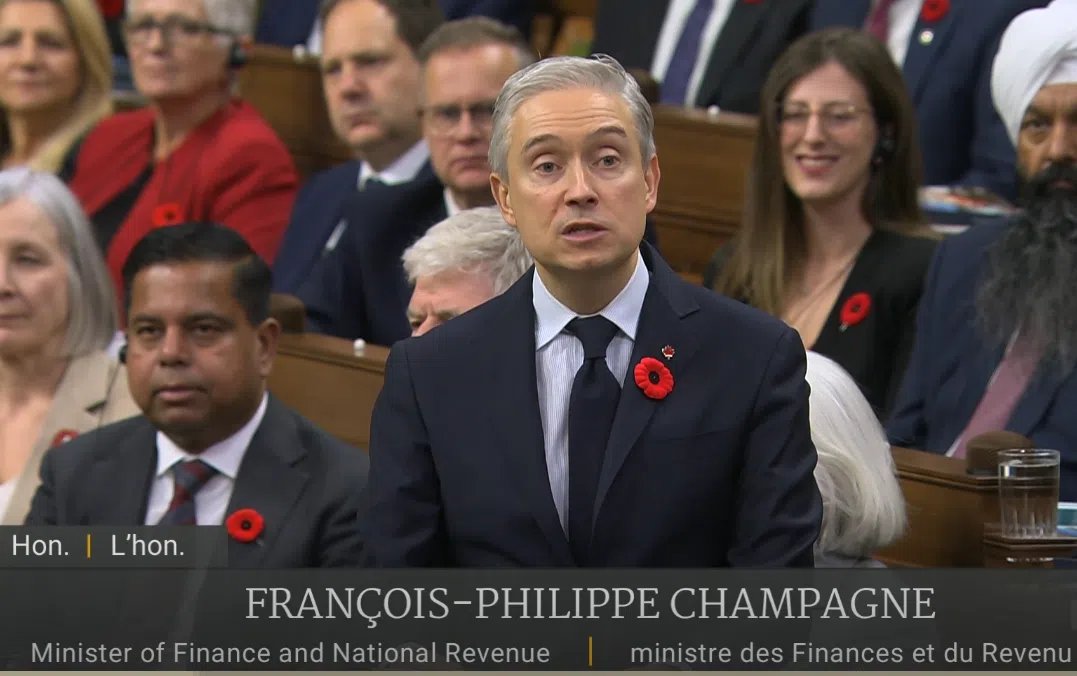
There were spending cuts in the federal budget as well. The government plans to eliminate up to 40,000 public service positions over the next three years. Federal Finance Minister Francois-Phillipe Champagne says “Since 2019, the federal public service population has grown at a rate which is far greater than the Canadian population. We must get the size of our public service back to a sustainable level that is keeping with bets practices.”
Foreign aid and research spending is going back to pre-pandemic levels resulting in a $2.7 billion cut over four years. In total, the federal government says it is expecting to reduce spending by $60 billion over five years through restructuring, consolidation and right-sizing government programs.
Phillipe Champagne also announced that federal budgets being delivered in the fall will be the new norm, as it coincides with construction season and better supports contractors in the delivery of their projects.
The question now is will this budget pass a Parliamentary vote in the coming weeks. The Liberals are three seats of a majority, so if all the opposition parties combined forces, they could defeat the budget which would lead to another election. However, Ottawa insiders believe a few MPs could abstain or not show up to the final budget vote.
Meanwhile, the union representing government employees is upset with the announced job cuts. The Public Service Alliance of Canada says recent polling suggests Canadians are concerned about the impact of cuts on already strained public services.
A written release from PSAC says according to a national survey of 2,000 adults indicates that people want to talk to humans instead of chatbots when accessing federal benefits. It also reveals that 51 per cent of respondents oppose the widespread layoffs. Instead of cutting public service employees, the survey indicated that 60 per cent of respondents want the government to prioritize addressing the cost of living.
In another response to hearing the 2025 budget delivery, the Canadian Taxpayers Federation says Prime Minister Mark Carney needs to get debt and spending under control. Franco Terrazzano, CTF Federal Director notes that the budget includes no plan to balance the budget and stop borrowing money, and the federal debt will reach $1.35 trillion by the end of this year. The news release continues that interest charges on this debt will cost taxpayers $55.6 billion this year, which is more than the federal government is planning to send to the provinces in health transfers at $54.7 billion.