




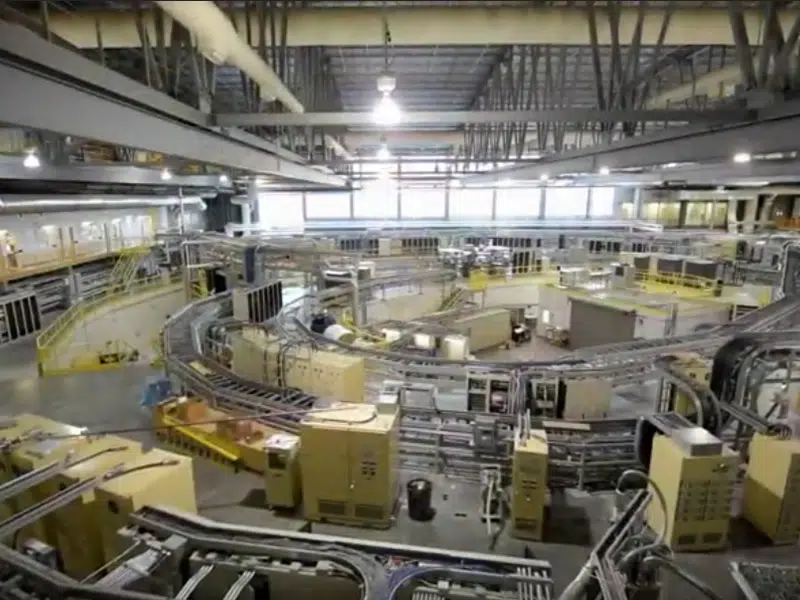
Medical isotopes were in the spotlight at the Canadian Light source this week with scientists from South Africa and Poland visiting the University of Saskatchewan.
Mark De Jong Chief Technology Officer with, Saskatoon based, Canadian Isotope Innovations explained the importance of medical isotopes which are used for medical diagnostics, imaging and therapy in the medical community.
The demand for medical isotopes is high and the supply has been low for a while. De Jong explains there are about 5 or 6 reactors throughout the world, and that all but one is fifty plus years old.
“The cost of building a new one from the ground up right now is very high, and hard to really still justify, just solely for isotopes. What we did when I was at the light source and started the program there was to try to look at an alternate way of making them using electron accelerators.” He added that the two groups currently visiting the CLS are from countries with aging reactors, also looking to find an alternative. With a worldwide shortage of medical isotopes CII is working together with the researchers at the synchrotron to find a cleaner and safer approach to isotope production.
When it comes to the research Rob Norris Senior Government Relations Officer with the Canadian Light Source says that the synchrotron is essential. “The research is operated out of the synchrotron , the safety levels on issues like radiation and the regulatory environment are absolutely essential. The technology is housed safely at the synchrotron. The scientists, some are visiting, some stay here and work here all the time.”
Norris added that one of the visitors expressed that the facility is very multi-cultural and draws from the very best across the country and around the world.
Over 1000 scientists use the Canadian Light Source each year, looking to conduct state of the art experiments in a number of fields including health and agriculture, right here in Saskatchewan.