




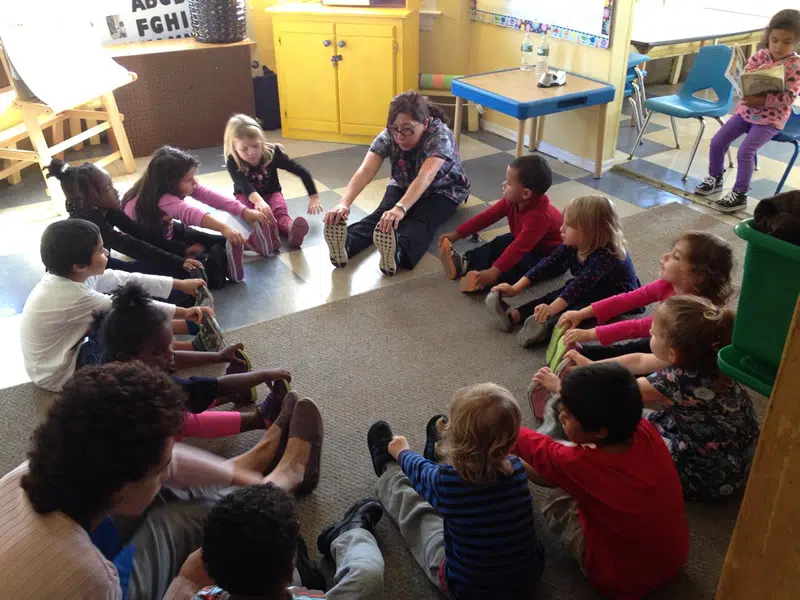
The provincial government provided an update on the federal-provincial childcare agreements and what the future of that agreement would look like in Saskatchewan. First signed back in 2021, the program looks to reduce the cost of childcare services through federal and provincial subsidies.
Everett Hindley, Minister of Education, talked about the history of the program and the province’s success.
“When the original agreement was signed in August of 2021, our government committed to building a child care system grounded in affordability, accessibility and quality. Thanks to some strong collaboration and hard work across the sector, Saskatchewan reached a major milestone well ahead of schedule. That is, back on April 1 of 2023, our province achieved $10 a day regulated childcare for children under six, which was well in advance of the original timeline of 2025-2026.”
The province says that as of December, Saskatchewan has reached 92 per cent of its new space creation target, representing a 146 per cent growth in early learning and childcare spaces. Certified early childhood educators have grown by 52 percent, and the average Early Childhood Educator (ECE) wages have increased by 43 percent.
The agreement extended
As of last November, the province of Saskatchewan entered into a five-year extension, which began this month, where families with children under the age of six will continue to pay $10 per day or $217.50 per month for full-time child care.
The extension also sees children in kindergarten who turn six on or after April 1 will remain eligible for a $10 per day rate until the end of the school year in June or until they turn seven years old, whichever comes first.
The future of funding
The province says it’s now shifting gears as Hindley explains that funding may not continue to support the growth rate seen over the past few years.
“As the system has expanded, the cost to operate and sustain a significantly larger number of regulated spaces has also increased. The federal funding under the agreement is not sufficient to meet the long-term costs of the expanded system and other provinces have stated this as well. While the new agreement includes a three percent annual escalator beginning in 2027-2028, there is no increase in federal funding for Saskatchewan in the current 2026-2027 fiscal year.”
As those realities set in, Hindley says they’ll work on making sure the current child care structure has enough support to stand.
“Given these realities, Saskatchewan, like other jurisdictions, is shifting from a period of rapid expansion towards what we’re now framing as a period of stabilization and sustainability in the sector. Our focus now is on protecting and sustaining the child care system that we have built over the past number of years. The actions we are taking are designed to safeguard the childcare program and to ensure the long-term viability of regulated childcare in Saskatchewan.”
New measures
Hindley lays out some of the new measures beginning July 1, which the province believes will help keep the programs running.
“This will include, number one, redirecting some existing funding for tuition-free ECE training to core operating costs for child care facilities.”
“Number two, additional child care space development will be strategically targeted to areas in need. A significant number of spaces are currently in development and are expected to become operational in the next year.”
“Number three, moving forward, the standard hours of child care service will be defined as 10 hours of care per day. Establishing the standard 10-hour day clarifies what is included in core childcare services and it gives the flexibility to charge for care provided beyond 10 hours per day if an operator chooses.”
“Number four, the Ministry of Education will be implementing a maximum monthly parent fee reduction grant based on enrollment and aligned with the number and types of licensed spaces. Facilities can still serve additional families within their regulated capacity by sharing spaces and collecting the parent fee of ten dollars a day.”
“Number five, the Ministry will also be sharing a child care operations policy framework with guidance on potential additional revenue streams that providers can use to supplement government funding.”
“Lastly, we’ll be providing additional support for facilities with the lowest fees.”
The province says they will host a number of engagement sessions with childcare providers in order to further consult with them on the changes.