



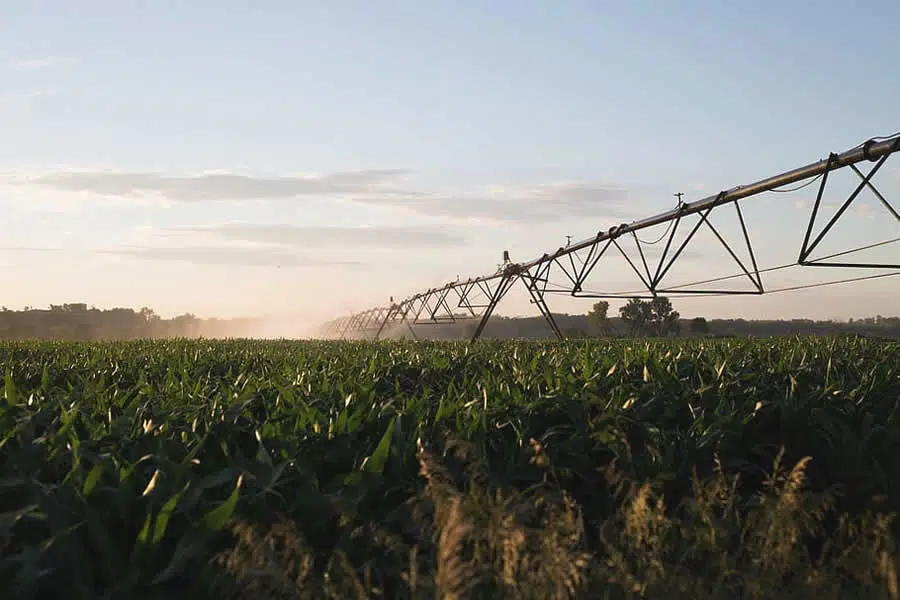
The provincial government is picturing an expansion of agricultural products that could be grown here if there was more irrigation infrastructure in place. That’s where a $4-billion irrigation project over the course of 10 years at Lake Diefenbaker comes in. Premier Scott Moe says this project would fulfill the vision of Prime Minister John Diefenbaker, irrigating up to 500-thousand acres of land, more than doubling what is available now.
Moe explains that it means more food security because vegetables like potatoes, corn, beets, cucumbers and lettuce could be grown. He says, “Right now many of the crops in Saskatchewan I think would be, in fairness, in that $400 to $600 an acre range would be the target. Now this gets us into the many thousands of dollars per acre.” It would also attract food processors to set up shop in Saskatchewan.
Moe believes the federal government help with funding for this project, because they have already shown interest. This is a 10 year project.
The project would also mean a secure water supply for decades to come.
The initial investment is $22.5-million for preliminary engineering and initial construction. Moe expects there will be 3 phases to the project.
Phase 1 will include the rehabilitation and expansion of the existing Westside irrigation canal system and will increase the amount of irrigable land by 80-thousand acres in that area.
The cost is estimated at $500-million, then the next 2 phases are estimated at up to $3.5-billion. Moe explains Phase 2 will see further expansion and buildout of the Westside Irrigation Project, adding another 260-thousand acres of irrigable land available for irrigation near Macrorie, Milden, Zealandia, and as far north as Delisle and Asquith.
Phase 3 will expand the Qu’Appelle South Irrigation Project, adding another 120-thousand acres of land that could be irrigated. It would run from Lake Diefenbaker and head south near the communities of Eyebrow, down to Marquis and into Buffalo Pound Lake. The Premier says it ill be a secure source of water for the Moose Jaw-Regina corridor and southern Saskatchewan.