



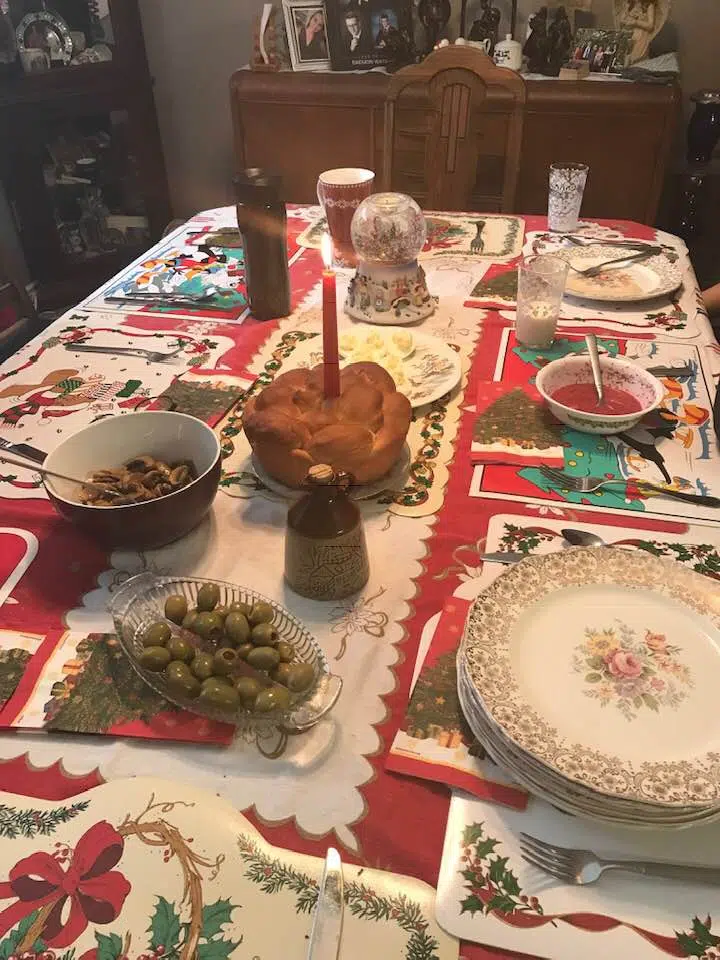
Even though most of the holidays are over, there’s are still some to be celebrated. Today (mon) is Ukrainian Christmas Eve and tomorrow is Ukrainian Christmas. For those celebrating the culture’s traditions, tonight will see a Christmas Eve supper comprised of 12 meatless dishes prepared with vegetable shortening or cooking oil. The 12 dishes represent the 12 apostles.
There is much symbolism in a Ukrainian Christmas celebration, the date of which is determined by the Julian calendar used by the Orthodox Church. There is the bread at the centre of the table that represents prosperity, the first sheaf of wheat cut at harvest is placed at the corner of the house symbolizing ancestors. An extra place is always set at the table for someone who has died. And those celebrating a traditional Ukrainian Christmas would place a lighted candle in the window to welcome those without families. According to the 2016 census, 143, 700 people in Saskatchewan identify as having Ukrainian heritage.
Ukrainians aren’t the only ones celebrating Christmas on January 7th, which would be December 25th in the Julian calendar. All practicing Orthodox Christians recognize the older calendar, with churches originating in countries like Russia, Serbia, Romania, Greece and Poland.
The traditions may differ a bit, but generally there is a fasting period prior to Christmas Day with no meat allowed and on Christmas Eve there is a feast, to celebrate the end of the fast. That’s followed by Christmas carolling from house to house Christmas Eve and Christmas Day.