




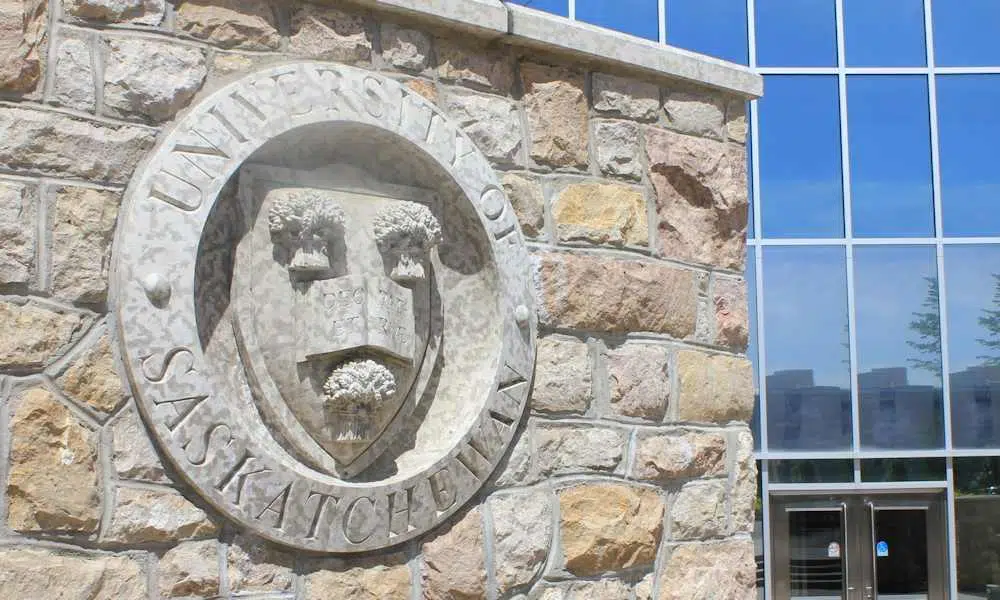
Work to reduce carbon dioxide in the atmosphere as well as provide a renewable source of energy is happening at the University of Saskatchewan’s Canadian Light Source.
Mahdi Salehi, a researcher at McGill University, says his team used the CLS to develop tiny particles called copper nanoclusters which allow for the conversion of carbon dioxide into methane.
“By applying energy or electricity to the system and to this catalyst, we can convert CO2 into different kinds of fuels, and methane is one of them.”
With this technology, a loop can be created where carbon emissions are captured and turned into methane, which can then be burned to create heat and energy. The CO2 that is emitted when it’s burned can be captured again, and the process starts over.
He says there are some challenges with the system, like the fact that the copper catalyst is just 1cm by 1cm in size. He says if the product were to be applied to industrial processes, it would have to be upscaled significantly.